comparison
Kitten Heels vs Block Heels: Which Is Easier to Walk In?
Choose kitten heels for a finer, more delicate line; choose block heels for a broader, more planted base. Comfort still depends on height, fit, toe shape and cushioning.
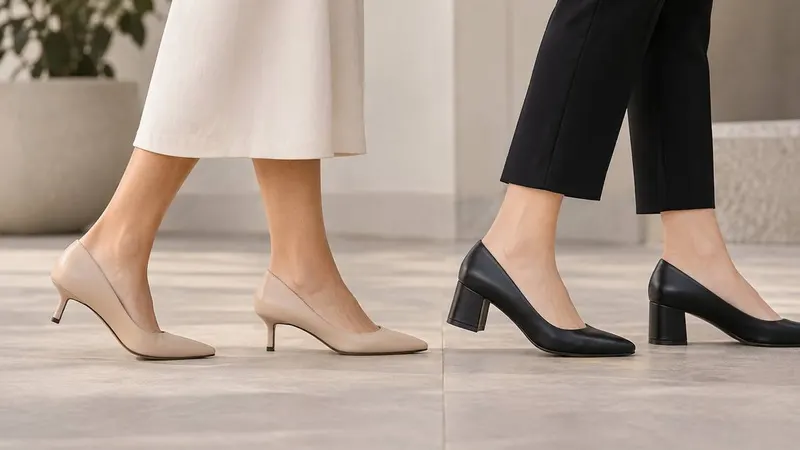
Decision this guide answers: Choose between the lighter, narrower base of a kitten heel and the broader, steadier base of a block heel for the way you actually walk and dress.
Intro
Kitten heels and block heels can sit in the same low-to-mid-height territory, yet they feel and look different for one simple reason: the heel meets the ground differently. A kitten heel keeps the contact point narrow and the silhouette fine; a block heel spreads that footprint wider and looks more grounded.
That wider base is why block heels are often the easier choice when stability is the priority. But heel shape is only part of comfort. A lower, well-fitted kitten heel can be easier than a taller block heel, and toe shape, cushioning, slingback tension and heel hold can change the experience just as much.
Style matters too. Kitten heels bring a lighter line to pointed tailoring, dresses and evening looks. Block heels sit naturally with work trousers, denim and outfits where you want polish without making the shoe feel delicate.
The simplest mental model is this: pick a kitten heel if you want modest lift with a finer, dressier profile; pick a block heel if you want a broader base and a more planted everyday step.
Quick recommendations
Jumping-off points — each is explained with full editorial notes below.
-
 Choose for a lighter, dressier line DREAM PAIRS Women's Kitten Slingback Heels Pumps The narrow heel and pointed slingback shape read more delicate with skirts, dresses and sharper tailoring.
 -
 Choose for a more planted step DREAM PAIRS Low Chunky Block Work Pumps The wider heel base and lower profile make the silhouette feel more grounded for office days and mixed indoor walking.
How we chose
Compared heel-base geometry, heel height, upper shape, everyday formality, outfit range and the kinds of walking each silhouette asks you to do.
Criteria
- Stability and planted feel
- Heel height and pitch
- Toe and upper shape
- Office-to-evening versatility
- Walking context and surface
- Visual weight with common outfits
What this guide is not
- We did not wear-test these two pairs. Fit, sizing, materials and availability can change, and individual comfort depends heavily on foot shape and shoe fit.
- The example kitten heel is slightly taller than the example block heel, so this is not a controlled same-height comfort test; the guide separates heel-shape trade-offs from the product-specific details.
Product recommendations
Choose if elegance matters as much as ease
DREAM PAIRS Women's Kitten Slingback Heels Pumps
Why we picked it
This 2.36-inch kitten-heel slingback is a useful example of the silhouette: a narrow heel, pointed toe and open back create a lighter visual line without moving into a high stiletto.
Best for
Dressier workwear, events and outfits that benefit from a finer heel profile.
Avoid if
You want the widest possible heel base, regularly cross uneven paving or dislike slingback straps.
More detail
Key characteristics
- 2.36-inch kitten heel
- Pointed closed toe
- Slingback construction
- Faux-leather upper
- 4 mm high-density latex footbed
Styling notes
Its pointed toe and slim heel work especially well with straight trousers that finish above the ankle, midi skirts and clean column dresses. Keep hems from pooling around the heel so the finer silhouette stays visible.
Trade-offs
You get a more delicate line and a modest heel height, but the narrower contact point gives you less lateral forgiveness than a comparably low block heel. The slingback also adds another fit variable at the heel.
Pros
- Low enough to keep the overall profile restrained
- Pointed slingback shape transitions easily from office to occasion dressing
- Padded footbed adds cushioning without changing the slim silhouette
Cons
- Narrower heel base is less forgiving on uneven surfaces
- Pointed toe and slingback fit can matter as much as heel type for comfort
View at retailer Stylen may earn a commission from qualifying purchases. Prices and availability can change.
Choose if stability is the priority
DREAM PAIRS Low Chunky Block Work Pumps
Why we picked it
This 1.97-inch work pump shows the practical case for a block heel: a broad heel base, low lift and closed pump shape that visually feels more grounded than a narrow kitten heel.
Best for
Office days, standing-heavy schedules and shoppers who prefer a steadier heel footprint.
Avoid if
You want the lightest-looking heel, a pointed slingback profile or a more evening-led silhouette.
More detail
Key characteristics
- 1.97-inch block heel
- Closed round toe
- Slip-on pump construction
- Faux-leather upper with fabric lining
- Triple-layered molded insole with gentle arch support
Styling notes
The thicker heel sits naturally with wide-leg trousers, straight denim, midi skirts and practical office separates. Because the heel has more visual weight, cleaner hems and simple uppers keep it polished rather than heavy.
Trade-offs
The broader base generally feels more planted, but a block heel is not automatically comfortable: heel height, shoe pitch, toe room, cushioning and how securely the upper holds your foot still matter.
Pros
- Broader heel base gives a more planted feel
- Low heel height suits everyday office styling
- Round closed toe is less visually sharp than a pointed slingback
Cons
- Chunkier heel reads heavier with very delicate outfits
- Slip-on pumps rely on a secure heel fit to avoid lifting at the back
View at retailer Stylen may earn a commission from qualifying purchases. Prices and availability can change.
Comparison
Slim kitten heel or wider block heel: choose the footprint that matches your walking and styling priorities.
| Kitten heel | Block heel | |
|---|---|---|
| Best if you want | A lighter, more delicate heel line with modest lift | A broader, more grounded base for everyday walking |
| Stability feel | Narrower contact point; rewards a controlled stride | Wider contact point; usually feels more planted side to side |
| Visual effect | Refined, slim and slightly dressier | Practical, substantial and more workday grounded |
| Uneven surfaces | More likely to catch or wobble on gaps, gravel or rough paving | More forgiving, though still not a substitute for a flat on difficult ground |
| Outfit pairing | Pointed tailoring, midi skirts, dresses and evening separates | Trousers, denim, midi skirts and office-focused separates |
| Main comfort variable | Heel height plus pointed-toe and slingback fit | Heel height plus toe room, cushioning and heel hold |
Buying advice
If walking ease is your first priority, start with heel height and fit, then look at heel shape. At a similar height, a block heel's wider base usually feels more planted than a kitten heel's narrow base. That does not make every block heel more comfortable: a too-high block heel, cramped toe box or loose pump can still be harder to wear than a well-fitted low kitten heel.
Pick the kitten heel if you want a finer visual line and mostly move across smooth indoor floors, shorter commutes or event settings. Pick the block heel if your day involves more standing, office corridors, transit changes or mixed surfaces. If neither feels right, a low wedge, loafer, ballet flat or supportive dress flat is the better escape hatch rather than forcing a heel silhouette that does not suit your routine.
Styling advice
Kitten heels look strongest when the rest of the outfit keeps some lightness around the ankle: cropped trousers, straight jeans, midi skirts and clean dresses all let the slim heel read intentionally. A pointed toe reinforces that longer, sharper line.
Block heels can carry more visual weight, so balance them with trousers that have structure, midi lengths, straight denim or a substantial knit. With very floaty dresses, choose a cleaner upper and a lower block heel so the shoe supports the outfit without dominating it.
Frequently asked questions
Which is more comfortable and stable: kitten heels or block heels?
At a similar heel height, block heels usually feel more stable because the heel has a wider contact area. Comfort is more individual: heel height, shoe pitch, toe shape, cushioning and fit can outweigh heel type.
Who should choose kitten heels?
Choose kitten heels if you want modest lift with a slimmer, dressier silhouette and most of your walking is on predictable surfaces. They are especially useful when a full stiletto feels excessive but a flat feels too casual.
Who should choose block heels?
Choose block heels if you prioritise a more planted step, expect longer standing periods or want a work-friendly heel that feels visually and physically more grounded.
When is neither heel the right choice?
If you expect long-distance walking, cobbles, gravel, steep routes or a day where foot fatigue matters more than dressiness, a flat, loafer, low wedge or supportive sneaker is usually the more practical direction.
Sources
- Stylen editorial policy (accessed 2026-09-23) — Affiliate disclosure, AI usage, and recommendation standards
- DREAM PAIRS Women's Kitten Slingback Heels Pumps (accessed 2026-09-23) — Product specifications and availability
- DREAM PAIRS Low Chunky Block Work Pumps (accessed 2026-09-23) — Product specifications and availability
Related articles
-
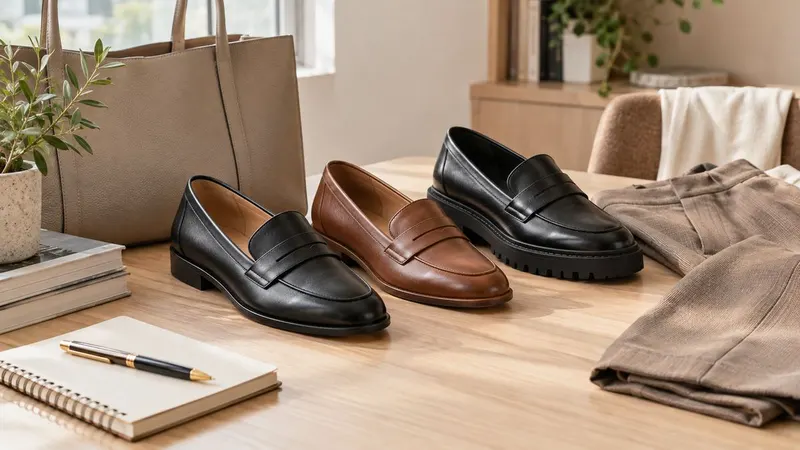 Best Women's Loafers Under $60 for Work and Everyday Wear The best women's loafers under $60 balance polish with realistic everyday comfort. We compare classic flats, pointed toes and chunkier soles for work, commuting and off-duty wear.
 -
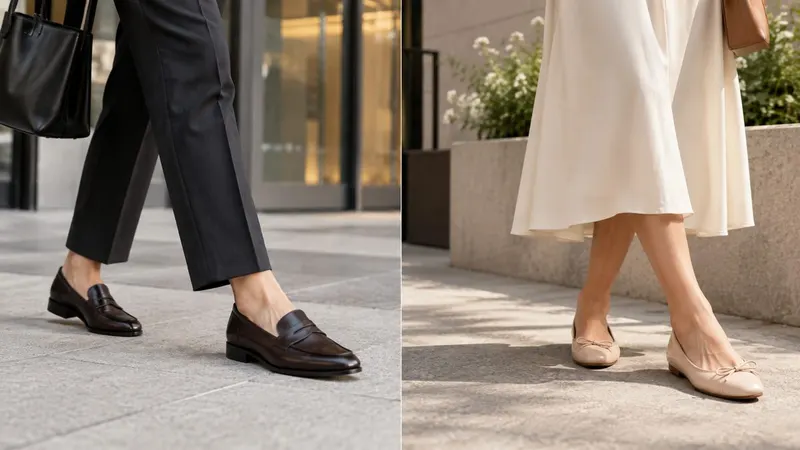 Loafers vs Ballet Flats: Which Is Better for Work and Everyday Wear? Loafers look more structured and office-ready; ballet flats are lighter and softer. Compare comfort, versatility, dressiness and outfit range before choosing your everyday flat.
 -
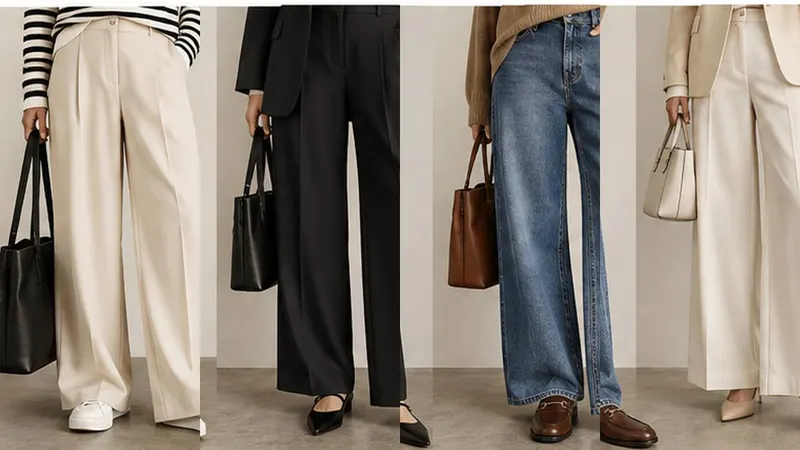 What Shoes to Wear With Wide-Leg Pants: Flats, Sneakers, Loafers and Heels The best shoe for wide-leg pants depends less on a single rule than on hem length, toe shape and the mood you want. Use these formulas to balance volume without losing the trousers' fluid line.
 -
 Best Ballet Flats Under $50: Comfortable Everyday Picks Affordable ballet flats can still look polished if the shape, cushioning and upper suit how you actually dress. These eight picks cover classic, pointed, knit, wide-fit and packable options below $50 at review time.
 -
 Mary Janes vs Ballet Flats: Which Flat Shoe Is More Versatile? Mary Janes feel more intentional and secure because of the strap; ballet flats are cleaner, faster and easier to blend into more outfits. Here is how to decide which silhouette earns more wear in your wardrobe.