styling
What Shoes to Wear With Dresses: A Guide by Length and Occasion
The right shoe can make the same dress feel relaxed, polished or evening-ready. Use hemline, visual weight and occasion to choose sneakers, flats, heels, sandals or boots with more intention.
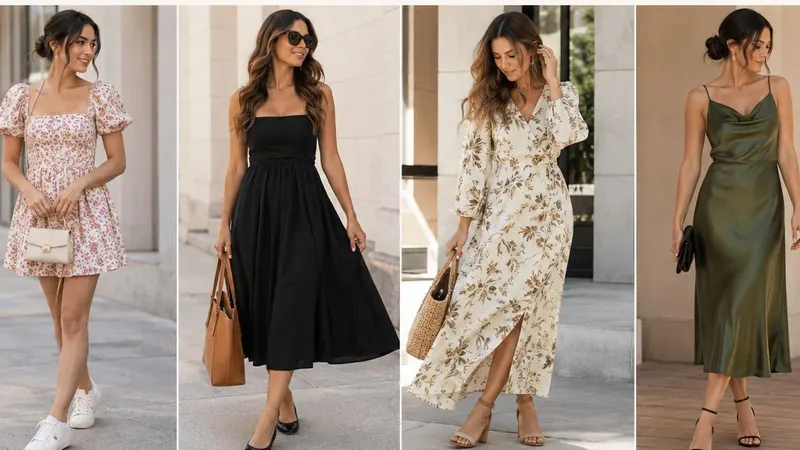
Decision this guide answers: Choose shoes that balance a dress's length and silhouette while shifting the outfit toward the right level of formality for the occasion.
Shoes do more than finish a dress. They change its pace, proportion and level of formality. A floaty midi can read relaxed with sneakers, precise with a pointed flat or event-ready with a slim heel, even when the dress itself stays exactly the same.
The easiest way to choose is not to memorise a fixed shoe for every hemline. Start with the dress silhouette, notice where the hem ends, then decide whether you want the shoes to soften, ground, lengthen or sharpen the outfit. Occasion comes next.
Start with the hemline and visual weight
Dress length changes how much visual space is left for the shoe. That is why the same pair can feel balanced with one hem and heavy with another.
With a mini dress, more leg is visible, so the shoe has room to be substantial. Sneakers, loafers and boots can add useful weight without crowding the silhouette. If the dress is already structured or voluminous, a slimmer shoe can keep the outfit from becoming overly blocky.
A midi dress creates the most interaction between hemline and footwear because the hem often lands around the widest part of the calf or lower leg. Shoes that expose some of the foot, taper at the toe or sit low on the vamp can visually lengthen the line. Chunkier shoes can still work, but they make a more deliberate statement and usually feel best when the dress has enough shape to balance them.
With a maxi dress, the shoe may only appear in flashes as you move. Comfort and hem clearance matter as much as appearance. Streamlined flats keep the effect easy; a block heel adds height without making the outfit feel overly delicate; a sharper heel can make a fluid maxi feel more polished.
Think of visual weight as a dial rather than a rule. A chunky shoe grounds. A narrow shoe lengthens. An open shoe lightens. A pointed shoe sharpens.
Mini dresses: ground the shorter hem
Mini dresses already create a light, leg-focused silhouette, so shoes can either continue that lightness or deliberately anchor it.
For casual daytime dressing, low-profile sneakers make the mini feel less precious. This works particularly well with floral, cotton, denim or simple knit dresses because the sneaker introduces an everyday counterpoint. Keep the rest of the outfit uncomplicated: a crossbody bag, soft tote or light jacket is enough.
Ballet flats and Mary Janes create a softer line. They are useful when a mini has a neat collar, fitted waist or more polished fabric because they preserve the dress’s refined character without pushing it into evening territory.
For a stronger look, ankle boots or loafers add structure. The trade-off is visual weight. If the shoe feels heavy, show a clean break of leg between shoe and hem, or choose a dress with enough shape through the shoulder or skirt to hold its own.
Heels can work with minis too, especially for evening, but height is not automatically the goal. A lower kitten heel or slim sandal often keeps the proportions more relaxed than a very high platform.
Midi dresses: keep the ankle area considered
Midi dresses are where proportion becomes most noticeable. Because the hem sits between knee and ankle, the shoe can either extend the vertical line or create a clear stopping point.
For everyday wear, clean sneakers work best when they do not visually compete with the hem. A straight or slip-style midi can take a slightly fuller sneaker, while a voluminous gathered midi often feels easier with a sleeker profile.
Flats are one of the most adaptable midi pairings. Pointed flats add direction and can make a work outfit feel sharper. Rounded ballet flats soften the look. Loafers add structure and make a midi feel more tailored, particularly with shirt dresses and knit dresses.
If you want lift, block heels and low slingbacks are useful because they add height without changing the mood as dramatically as a stiletto. For evening, a slimmer heel or strappy sandal exposes more of the foot and lets the dress take the visual lead.
The practical question is not “flats or heels?” but how much visual break do you want at the ankle? A lower vamp and open instep extend the line. A closed, chunky shoe creates a stronger stop.
Maxi dresses: let the shoe support the movement
A maxi dress already carries a lot of fabric and vertical line, so the shoe usually works best as support rather than competition.
For relaxed maxis, flat sandals keep the outfit airy. A simple leather or minimal strappy shape works especially well with linen, cotton and softly printed dresses. If you prefer more coverage, a streamlined sneaker can make a maxi practical for walking while keeping the outfit modern.
A block-heel sandal is an easy bridge between casual and dressed-up. It gives the hem extra clearance and adds some structure without looking too formal. This is useful for garden events, dinners, holidays and occasions where you may be standing for longer periods.
For dressier maxis, slim heels, slingbacks or pointed shoes can make the silhouette feel more intentional. You do not need the shoe to disappear; you simply want it to echo the refinement of the dress.
Check the hem while wearing the actual shoes you plan to use. A maxi that is the right length with flats may drag with a different posture, while one altered for heels can feel awkwardly short with sneakers.
Match the shoe to the occasion, not only the dress
The same dress can move between settings when the shoe changes the outfit’s level of formality.
For casual daytime, sneakers, flat sandals and easy loafers introduce movement and practicality. These choices tell the eye that the dress is being worn as part of an everyday wardrobe rather than saved for an event.
For work or smart daytime, pointed flats, loafers, slingbacks and restrained block heels add structure. They work particularly well when repeated by another polished element, such as a defined bag, belt or tailored layer.
For weekends and travel, prioritise shoes you can comfortably walk in. A dress already gives the outfit visual cohesion, so the footwear does not need to be elaborate. Clean sneakers, supportive sandals and low-profile flats can keep the look considered without feeling overworked.
For evening and events, heels are one option rather than the default. A refined flat can be equally appropriate when its shape and finish match the formality of the dress. Metallic finishes, satin textures, delicate straps and a sharper toe can all raise the dressiness without relying on extra height.
Use colour to connect, contrast or disappear
Shoe colour changes how strongly the footwear registers.
A shoe close to your skin tone, the dress colour or a soft neutral tends to lengthen and quieten the lower half. This can be useful with busy prints, dramatic sleeves or a dress that already has a strong silhouette.
Repeating one colour from the dress in the shoe creates a connected look without requiring an exact match. With a floral dress, for example, the shoe can echo a secondary colour rather than the dominant one.
A contrasting shoe creates a focal point. White sneakers with a dark dress feel graphic and casual. Red flats with a neutral dress can make the footwear part of the styling idea. Black shoes add definition, especially when another black detail appears in a bag, belt or outer layer.
If the combination feels too matched, separate the colours. If it feels disconnected, repeat the shoe colour once elsewhere in the outfit.
Adjust the formula with layers, bags and jewellery
When a shoe changes the mood of a dress, supporting pieces can make the shift feel deliberate.
If sneakers make a dress feel too casual for the setting, add a structured bag, crisp jacket or more defined jewellery. The shoe can stay comfortable while the rest of the outfit supplies polish.
If heels make a dress feel too event-focused, soften the formula with a relaxed jacket, knit layer or understated bag. This keeps the height while lowering the overall formality.
Boots often need a little more visual support. A leather jacket, stronger belt, textured bag or knit layer can repeat their weight above the hem so the footwear does not feel isolated.
The goal is not perfect matching. It is distribution: if one element is visually heavy, sharp, shiny or casual, give it one quiet echo elsewhere.
Common fixes when the pairing feels off
When a dress-and-shoe combination is not working, change one variable before replacing the entire outfit.
- If the shoes feel too heavy, try a slimmer sole, lower vamp, pointed toe or more open shape.
- If the outfit feels too delicate, add a loafer, boot, sneaker or block heel to ground it.
- If a midi feels leg-shortening, expose more of the instep or choose a shoe closer in tone to your leg.
- If sneakers feel too sporty, use a cleaner profile and repeat their simplicity with a structured or minimal accessory.
- If heels feel too formal, lower the heel, choose a block shape or add a relaxed layer.
- If the shoe colour feels random, repeat it once in a bag, belt, print detail or jewellery tone.
A good dress-and-shoe pairing is less about following a rule than deciding what role you want the shoe to play. Let it ground, lighten, sharpen or relax the dress, then use the rest of the outfit to support that direction.
Frequently asked questions
Should I wear sneakers, flats or heels with a midi dress?
All three can work. Sneakers make a midi feel more casual, flats keep the line polished without adding height, and heels add lift and formality. The most useful cue is the dress silhouette: fuller midis often benefit from a visually lighter shoe, while straighter midis can handle a more substantial sneaker or loafer.
What shoes work best with a maxi dress?
Choose enough structure or height to keep the hem from overwhelming the shoe. Flat sandals and streamlined sneakers suit relaxed maxis, while block heels, heeled sandals and pointed shoes can sharpen a dressier maxi. Make sure the hem clears the floor comfortably.
How do I make sneakers with a dress look intentional?
Repeat the sneaker's casual energy elsewhere in the outfit with a simple bag, light layer or minimal jewellery. Clean proportions matter more than matching colours exactly, so keep the shoe visually neat if the dress is soft or refined.
How do I keep shoes from making a dress look heavy?
Reduce visual weight around the ankle. Try a lower vamp, slimmer sole, open sandal, pointed toe or colour that does not sharply cut across the leg. If you want a chunkier shoe, balance it with a shorter hem, stronger dress shape or another structured element.
Can I wear flat shoes with a formal dress?
Yes. A pointed flat, slingback, refined ballet flat or minimal embellished sandal can feel formal without a heel. Look for a clean shape and finish that supports the dress rather than competing with it.
Sources
- Stylen editorial policy (accessed 2026-09-23) — Affiliate disclosure, AI usage, and recommendation standards