styling
What Shoes to Wear With Jeans: Straight, Wide-Leg, Barrel and Bootcut
The most flattering shoe-and-jeans pairings come down to proportion. Use the hem, leg shape and visual weight of the shoe to make straight, wide-leg, barrel and bootcut denim feel intentional.
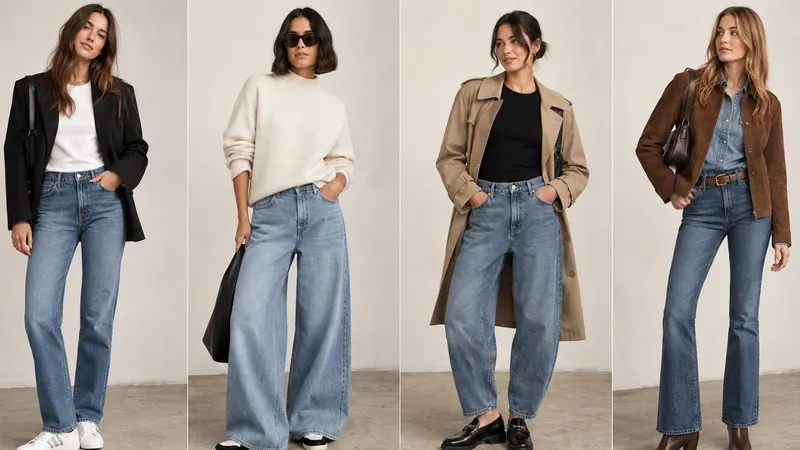
Decision this guide answers: Choose shoes that balance each jean shape so the hem, volume and overall outfit proportion work together rather than compete.
The easiest way to decide what shoes to wear with jeans is to look at the shape of the denim before the shoe trend. A straight leg creates one kind of line, a wide leg creates another, and curved barrel denim behaves differently again. The right pairing is less about finding one universally correct shoe and more about making the hem, volume and footwear feel visually connected.
A useful quick read is this: straight jeans tolerate the widest range of shoes; wide-leg jeans need a deliberate hem-to-shoe relationship; barrel jeans benefit from a clearly defined shoe shape; and bootcut jeans usually look strongest when the hem can fall cleanly over the footwear.
Start with the jean shape, not the shoe trend
Before choosing sneakers, loafers, boots or heels, notice three things: where the jeans end, how much volume the leg carries, and how much of the shoe remains visible.
Hem length changes the whole equation. Cropped jeans expose more of the shoe, so even a delicate flat can have enough presence. Full-length jeans cover more of the foot, which means the shoe may need a stronger toe shape, a little height or simply a cleaner line so it does not disappear under the denim.
Volume matters in the same way. When jeans are already wide, curved or heavily stacked at the ankle, adding a very bulky shoe can make the lower half feel visually crowded. That does not mean chunky shoes are off-limits. It means the combination works best when the hem looks intentional rather than accidental.
Think in terms of balance rather than rules:
- A slim or low-profile shoe can edit down a voluminous jean shape.
- A pointed or elongated toe can extend the line of full-length denim.
- A structured loafer or ankle boot can ground softer, looser jeans.
- A sneaker can soften tailored denim and make it read more casual.
- A little heel height can lift a long hem without turning the outfit formal.
These ideas are adaptable. Your ideal combination will also depend on the rise of the jeans, your preferred hem length and the rest of the outfit.
Straight-leg jeans: keep the break clean
Straight-leg jeans are the easiest shape to restyle because the leg width stays relatively consistent from thigh to hem. They can move between casual, polished and slightly dressier looks without asking the shoe to correct the silhouette.
For an everyday outfit, a clean sneaker is an easy way to keep the line relaxed. The useful detail is the hem break: if the jeans are full length, let them meet the top of the sneaker without collapsing into several folds. If the jeans are cropped, a little ankle showing can make the same sneaker feel lighter.
Loafers and ballet flats shift straight jeans in a more polished direction. A loafer adds visual weight and structure, especially with a blazer, knit or crisp shirt. A ballet flat does the opposite: it keeps the lower line lighter and works well when the jeans are ankle length or slightly cropped.
Pointed flats or low heels can make straight denim feel more dressed up because the toe extends beyond the vertical line of the jean. That small change is useful for dinners, smart-casual offices or occasions where a sneaker feels too relaxed but a high heel feels unnecessary.
Ankle boots also pair naturally with straight jeans. If the jeans are cropped, the hem can sit just above the boot shaft. If they are longer, a boot with a neat shaft and defined toe tends to sit more cleanly underneath.
The styling idea to keep: straight jeans are neutral in proportion, so the shoe can do more of the mood-setting.
Wide-leg jeans: manage width and length together
Wide-leg jeans create the most visual volume, so shoe choice is closely tied to hem length. A shoe that works beautifully with cropped wide-leg denim can disappear completely under a floor-skimming pair.
With full-length wide-leg jeans, start by making sure the hem has a clear destination. A streamlined sneaker works when the jeans fall close to the top of the shoe without dragging. A loafer can add enough structure to anchor the width, while a pointed flat or heel creates a longer, more directional line beneath the denim.
If the jeans are very long, even a modest heel can change the proportion dramatically. The goal does not have to be extra height; it can simply be lifting the fabric so the wide leg hangs cleanly. Block heels, heeled sandals and ankle boots can all do this while keeping the outfit wearable.
For cropped wide-leg jeans, more delicate shoes become easier to use because the ankle and top of the foot are visible. Ballet flats, slim trainers, sandals and low-profile loafers can make the volume of the jeans feel deliberate rather than heavy.
If an outfit feels too bottom-heavy, edit one element. Swap a chunky sneaker for a slimmer one, shorten the visible hem break, or choose a shoe with a more defined toe. You do not need to make every element minimal; one clean line is often enough to restore balance.
The styling idea to keep: the wider the jean, the more important the hem-to-shoe relationship becomes.
Barrel jeans: let the shoe stay visible
Barrel jeans carry volume through the thigh and knee, then curve inward toward the ankle. That sculpted shape is already doing a lot of visual work, which is why the shoe often looks best when it remains clearly legible.
A loafer is a strong match because its structured outline contrasts with the rounded leg. The same logic applies to a ballet flat or pointed flat: both keep the shoe compact, allowing the curved denim to remain the main silhouette.
Slim sneakers work well for casual styling, particularly when the barrel jean ends above the ankle or tapers enough to show the shoe. If the sneaker is very bulky, the combination can still work, but it usually benefits from a shorter hem so the lower line does not become one continuous block of volume.
For cooler weather, ankle boots can give barrel jeans a sharper finish. A neat shaft and defined toe are easier to integrate than a very wide boot opening because they preserve the taper at the bottom of the jeans.
Barrel jeans also respond well to repetition elsewhere in the outfit. If the shoe is structured, echo that clarity with a compact shoulder bag or tailored jacket. If the shoe is softer, such as a ballet flat, a fine knit or relaxed shirt can make the outfit feel more cohesive.
The styling idea to keep: barrel jeans already provide the statement shape, so the shoe can clarify rather than compete.
Bootcut jeans: let the hem skim the footwear
Bootcut jeans are designed around the shoe more explicitly than the other shapes. The leg remains relatively fitted through the thigh, then opens from the knee downward. The most flattering-looking combinations usually preserve that gradual line.
Ankle boots are a natural match because the jean can fall over the shaft and continue into the shoe without a visual interruption. A pointed or almond toe can make the line feel slightly longer, while a rounded toe keeps it softer and more casual.
Heeled boots or low heels are useful when the jeans are cut long. The extra lift helps the hem skim the floor without stacking. A pointed pump can create a similar effect for a dressier outfit, especially when only the toe is visible beneath the denim.
Low-profile sneakers can also work with bootcut jeans, particularly for daytime. The key is making sure the hem is not so long that it bunches heavily over the sneaker. A cleaner break keeps the subtle flare readable.
If you want a Western influence without making the outfit feel costume-like, use one cue at a time. A suede boot, leather belt or textured jacket can add that direction while the rest of the look stays simple.
The styling idea to keep: bootcut denim looks most intentional when the hem skims over the shoe and keeps the leg line continuous.
Shift the same jeans from casual to polished
The shoe is one of the fastest ways to change the formality of jeans without changing the denim itself.
For a casual daytime formula, pair jeans with a sneaker, simple knit or tee, and relaxed outer layer. The sneaker softens the look and makes even darker or more tailored denim feel approachable.
To move the same jeans toward polished casual, swap the sneaker for a loafer, ballet flat or neat ankle boot. Then tighten one other part of the outfit: a structured bag, tucked shirt, cleaner belt or more compact jacket. The effect comes from editing the silhouette, not adding more pieces.
For evening, a pointed flat, low heel or heeled boot can create a stronger finish. Darker accessories, a smaller bag, a more fluid top or a little shine in the jewellery can push the outfit further without requiring a completely different pair of jeans.
The useful principle is to change one or two formality signals at a time. Shoes do a lot of the work, but they look most convincing when one other element supports the same direction.
Use proportion to solve awkward pairings
If a jeans-and-shoes combination feels slightly off, the problem is often proportion rather than the shoe category itself.
Start with the hem. Try a small cuff, a different inseam or a shoe with a slightly different sole height. A one- or two-centimetre change in where the denim lands can make more difference than switching from one trend to another.
Then look at visual weight. Chunky sneakers, lug soles and broad boots add mass. Wide-leg and barrel jeans do too. Pairing both can be intentional, but if the outfit feels heavy, add contrast with a shorter hem, a more fitted top or a cleaner bag shape.
Toe shape can also change the effect. Rounded shoes soften an outfit; pointed shoes lengthen it; square toes can make it feel more architectural. These are mood shifts rather than fixed rules, and they are useful because they let you adjust the same jeans for different settings.
Finally, consider repetition. A black loafer feels more integrated when black appears again in a belt, jacket or bag. A tan boot can feel more connected when the outfit repeats warm brown, camel or cream. Colour repetition is one of the simplest ways to make a shoe feel intentional even when the silhouette is unexpected.
The simple formula to remember
When choosing shoes for jeans, start with the denim’s shape and ask what the lower half of the outfit needs: more structure, less volume, extra length, or a clearer endpoint.
Straight jeans give you the most freedom. Wide-leg jeans ask you to manage width and hem length together. Barrel jeans benefit from a shoe that stays visible and defined. Bootcut jeans look strongest when the hem can fall smoothly over the footwear.
From there, use the shoe to set the mood. Sneakers make the look more relaxed, loafers add structure, flats keep it light, and boots or heels can lengthen and sharpen the line. None of these combinations needs to be treated as a commandment. The point is to understand why the proportion works so you can adapt it to the jeans and shoes already in your wardrobe.
Frequently asked questions
Which shoes suit straight-leg jeans?
Straight-leg jeans are flexible because the leg line is relatively clean. Low-profile sneakers, loafers, ballet flats, pointed flats and ankle boots can all work; the key is keeping the shoe visible enough that the hem does not collapse around it.
What shoes work best with wide-leg jeans?
Wide-leg jeans usually look most balanced with a shoe that gives the hem a clear endpoint, such as a streamlined sneaker, loafer, pointed shoe, heeled sandal or ankle boot. Hem length matters as much as shoe style.
How do you style shoes with barrel jeans?
Because barrel jeans already create volume through the leg, shoes with a defined, relatively compact shape tend to keep the outfit focused. Loafers, slim sneakers, ballet flats and neat ankle boots are useful starting points.
What shoes go with bootcut jeans?
Bootcut jeans are designed to open slightly over the shoe. Ankle boots, heeled boots, pointed shoes and some low-profile sneakers work well when the hem skims the footwear instead of bunching heavily on top.
How do I keep jeans and shoes from looking bulky together?
Adjust one source of volume at a time. If the jeans are wide or curved, choose a cleaner shoe shape; if the shoe is chunky, keep the hem deliberate and make sure enough of the shoe is visible to read as part of the outfit.
Sources
- Stylen editorial policy (accessed 2026-09-23) — Affiliate disclosure, AI usage, and recommendation standards