styling
What Tops to Wear With Wide-Leg Pants: A Guide to Length and Proportion
The easiest tops for wide-leg pants are not defined by one hemline. The key is deciding where the top ends, how much volume it adds, and whether the waist needs to stay visible.
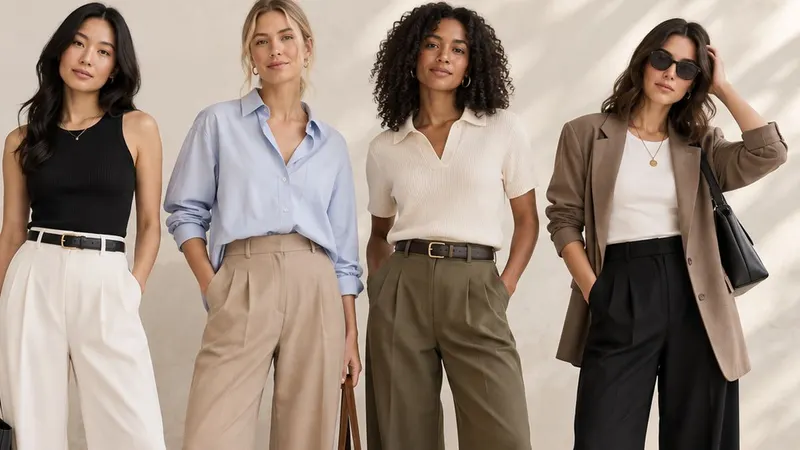
Decision this guide answers: Choose a top length and amount of volume that balances the width of the trousers while keeping the outfit intentional for the occasion.
Wide-leg pants already create a strong line through the lower half of an outfit, so the top does not need to be tiny, fitted or tucked by default. What matters more is whether the top gives the eye a clear place to understand the silhouette.
A close-fitting tank and an oversized shirt can both work with the same trousers. They simply solve the proportion question in different ways. One creates contrast; the other uses controlled volume. The most useful approach is to decide where you want definition, then let the rest of the outfit stay relaxed.
Start with proportion: decide where the top ends
Before thinking about colour or accessories, look at the vertical break between the top and the trousers.
With high-rise wide-leg pants, showing the waistband creates the clearest division. A tucked tee, waist-length knit or cropped shirt makes the legs appear visually continuous from the waist down. This is why these combinations often feel easy: the trouser shape stays obvious.
That does not mean longer tops are wrong. A top that falls around the upper hip can create a softer, more relaxed line, especially when the fabric is fluid rather than stiff. The important question is whether the hem lands at a deliberate point or simply covers the waistband and continues into the widest part of the trousers.
A useful way to edit the look is to check three things:
- Where does the top stop?
- Where is the narrowest visible point?
- Is the volume concentrated on the top, the bottom, or both?
If the answer to all three feels unclear, change only one variable first: tuck the top, shorten the layer, open the neckline or push up the sleeves.
Fitted Tops That Balance Wide Legs
A fitted knit, ribbed tank, bodysuit or simple tee is the most direct counterpoint to wide-leg trousers. The trousers provide movement and width; the top keeps the upper half visually quiet.
This is especially useful when the pants have pleats, a paper-bag waist or a very full leg. Letting the waistband stay visible prevents the fabric from reading as one continuous block.
A full tuck gives the sharpest definition. A front tuck is softer and works well when the back of the top has enough drape to fall cleanly. If the fabric is bulky, forcing it into the waistband can add volume exactly where you are trying to create clarity; in that case, a shorter untucked top is often cleaner.
For a casual formula, try wide-leg jeans or cotton trousers with a fitted crew-neck tee and low-profile shoes. For a more polished version, swap the tee for a fine-gauge knit or sleeveless shell and add a structured bag.
Untucked shirts work when the length looks intentional
An untucked top changes the outfit from waist-defined to column-like. That can be elegant, but the hemline becomes much more important.
A shirt that ends around the upper hip tends to feel easier than one that finishes at the fullest part of the thigh. The shorter length gives enough separation between the upper and lower volumes without requiring a tuck.
Fabric also matters. A soft poplin shirt, lightweight knit or fluid blouse can skim over the trousers without adding much bulk. A thick, boxy top at the same length may make the outfit feel heavier because both pieces project outward.
If you want to keep a longer shirt untucked, create definition somewhere else. Open a few buttons at the neck, roll the sleeves, choose a side-slit hem, or let a fitted base layer show underneath. These small breaks keep the shape from becoming visually solid.
Can you wear an oversized shirt with wide-leg pants?
Yes — but the combination benefits from editing because both pieces already carry volume.
One option is a partial tuck. It reveals the waistband without removing the relaxed character of the shirt. Another is to wear the shirt open over a close-fitting tank, which creates a vertical line through the centre of the outfit.
Sleeves matter more than they seem. Pushing an oversized sleeve to the forearm exposes the wrist and reduces the amount of fabric around the upper body. An open collar has a similar effect by adding skin and space near the face.
If you prefer the shirt fully untucked, keep the rest of the styling restrained. A clean shoe, simple bag and limited jewellery help the oversized proportions look intentional rather than busy.
The goal is not to make the top smaller. It is to give the eye a few points of structure inside the volume.
Shift the formula for work and evening
For work, wide-leg trousers pair naturally with tops that have a defined shoulder or a neat neckline. A tucked blouse, fine knit or crisp shirt keeps the outfit composed without making it severe.
A blazer can work well, but length changes the mood. A shorter jacket preserves the high-waisted proportion and makes the legs the dominant line. A longer blazer creates a straighter, more relaxed column. If the blazer and trousers are both roomy, keep the layer underneath relatively close to the body so there is still a visual anchor.
For evening, the same trousers can handle more contrast. A fitted satin top, asymmetric neckline, fine knit or compact cropped jacket can make the silhouette feel more deliberate without relying on a completely different outfit.
This is also where fabric contrast helps. Matte trousers with a subtle sheen on top, or fluid pants with a more structured top, create interest without needing a complicated colour palette.
Use shoes, bags and layers to reinforce the proportion
Shoes do not have to be high to work with wide-leg pants. The main consideration is how the trouser hem meets the shoe.
A low-profile sneaker or flat keeps the look casual and lets the trouser volume stay dominant (our guide to shoes for wide-leg pants goes through every option). A pointed or elongated toe can visually continue the vertical line. A chunkier shoe gives the hem more weight and can suit heavier denim or winter fabrics.
Bags can change the scale of the outfit too. A compact shoulder bag or structured top-handle bag adds a smaller shape against the width of the trousers. A large slouchy tote creates a more relaxed, volume-on-volume effect.
For layers, check where the outer piece ends in relation to the waistband and hip. Waist-length jackets sharpen the silhouette. Hip-length cardigans and blazers soften it. Long coats can work beautifully because they create one continuous vertical frame around the trousers.
10 Outfit Formulas to Copy
- Casual tee: Wide-leg jeans or cotton trousers, a fitted crew-neck tee tucked in, and low-profile sneakers.
- Polished knit: Tailored wide-leg trousers, a fine-gauge knit or sleeveless shell, and a structured bag.
- Untucked shirt: A soft poplin shirt that ends at the upper hip, worn loose with the sleeves rolled and the collar open.
- Partial tuck: An oversized shirt with a front tuck to show the waistband, plus a clean shoe and a simple bag.
- Open layer: An oversized shirt worn open over a close-fitting tank to create a vertical line.
- Office classic: A tucked blouse or crisp button-down with a shorter blazer and a polished shoe.
- Relaxed column: A longer blazer over a close-fitting top, so the outfit reads as one long line.
- Evening contrast: Matte wide-leg trousers with a fitted satin top and a pointed toe.
- Cropped jacket: A fine knit under a compact cropped jacket to keep the high-waisted proportion.
- Long coat: A long coat over wide-leg trousers and a fitted knit for one continuous frame.
Common proportion traps — and simple edits
If wide-leg pants feel difficult, the issue is usually not the pants themselves. It is often that several proportions are competing at once.
The top feels too long. Try a front tuck, a shorter layer, or a hem that stops before the widest part of the thigh.
Everything feels oversized. Keep the volume, but reveal one point of structure: wrist, waist, collarbone or shoulder.
The tuck feels bulky. Use a finer fabric, tuck only the front, or switch to a waist-length top instead.
The outfit looks too formal. Replace a sharp shoe with a flat or sneaker, soften the bag, or leave the shirt slightly open.
The outfit looks too casual. Add one structured element — a defined shoulder, polished shoe, compact bag or cleaner neckline.
The useful rule is not “wide pants need a fitted top.” It is that wide-leg trousers already make a strong shape, so the top should either contrast with that shape or repeat it deliberately. Once the proportion looks intentional, colour, texture and accessories become much easier to adjust.
Frequently asked questions
Should you tuck in your top with wide-leg pants?
Not always. A full tuck or front tuck can define the waist and make the trouser shape easier to read, but an untucked top can work when its hem is intentional and does not compete with the widest part of the pants.
Can you wear an oversized shirt with wide-leg pants?
Yes. The combination works best when there is some structure or a visible break in the volume, such as rolled sleeves, an open neckline, a partial tuck, or a shirt hem that stops at a deliberate point.
What top length works best with high-waisted wide-leg pants?
Cropped-to-the-waist, tucked and hip-skimming lengths are the easiest starting points because they show where the trousers begin. Longer tops can still work when the silhouette remains controlled.
How do you keep wide-leg pants from looking overwhelming?
Create one clear point of definition. That might be the waist, a close-fitting top, a shorter jacket, an open neckline or a structured shoulder. The goal is contrast in shape rather than making every piece slim.
Styling inspiration
-
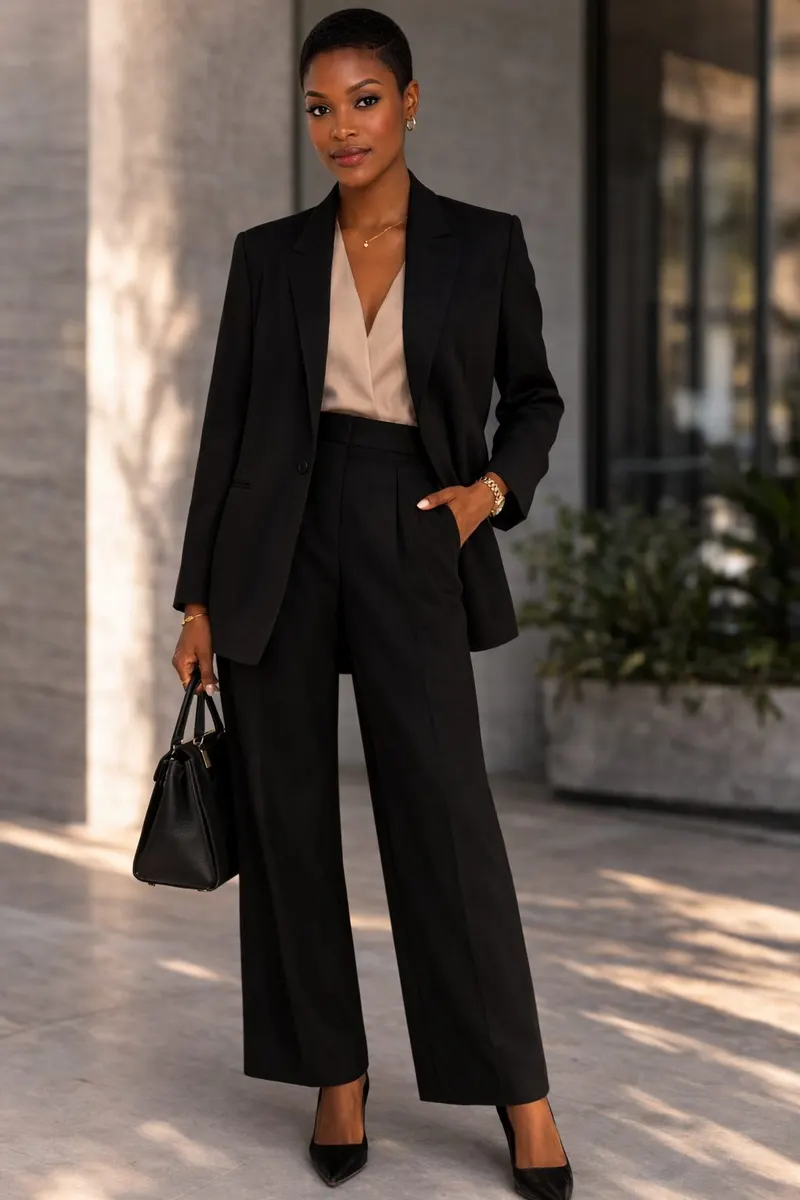
Black Blazer and Wide-Leg Trousers Outfit: Polished Minimal Workwear With Editorial Ease
-
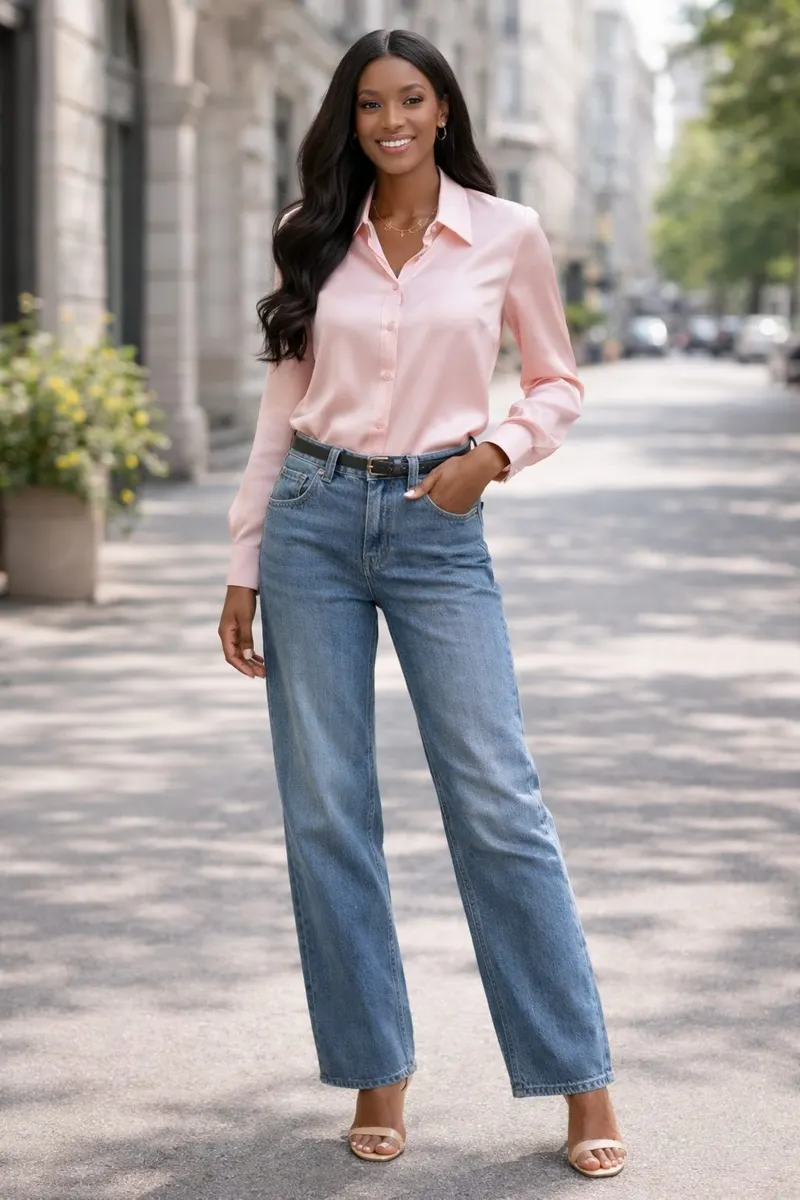
Blush Satin Shirt + Wide-Leg Denim: The Polished Casual Uniform That Always Works
-
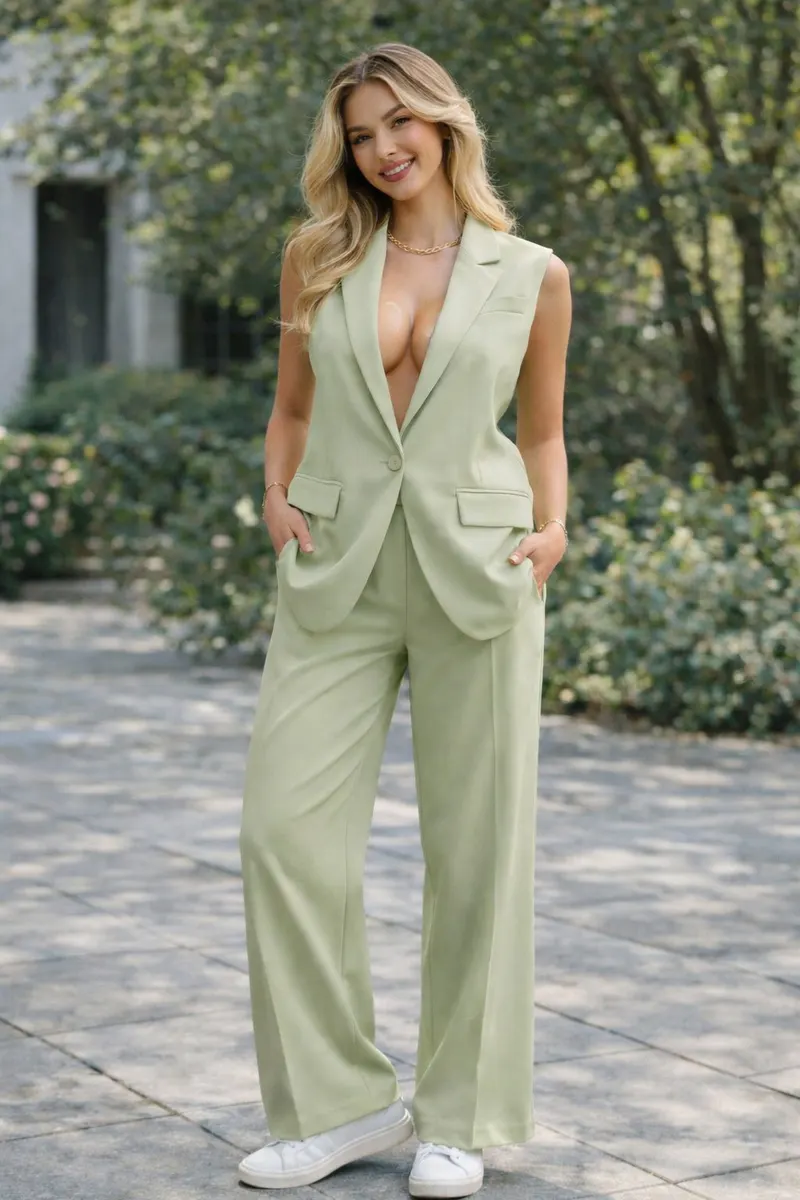
Sage Sleeveless Blazer Set Outfit: Modern Tailoring with a Soft Relaxed Edge
-
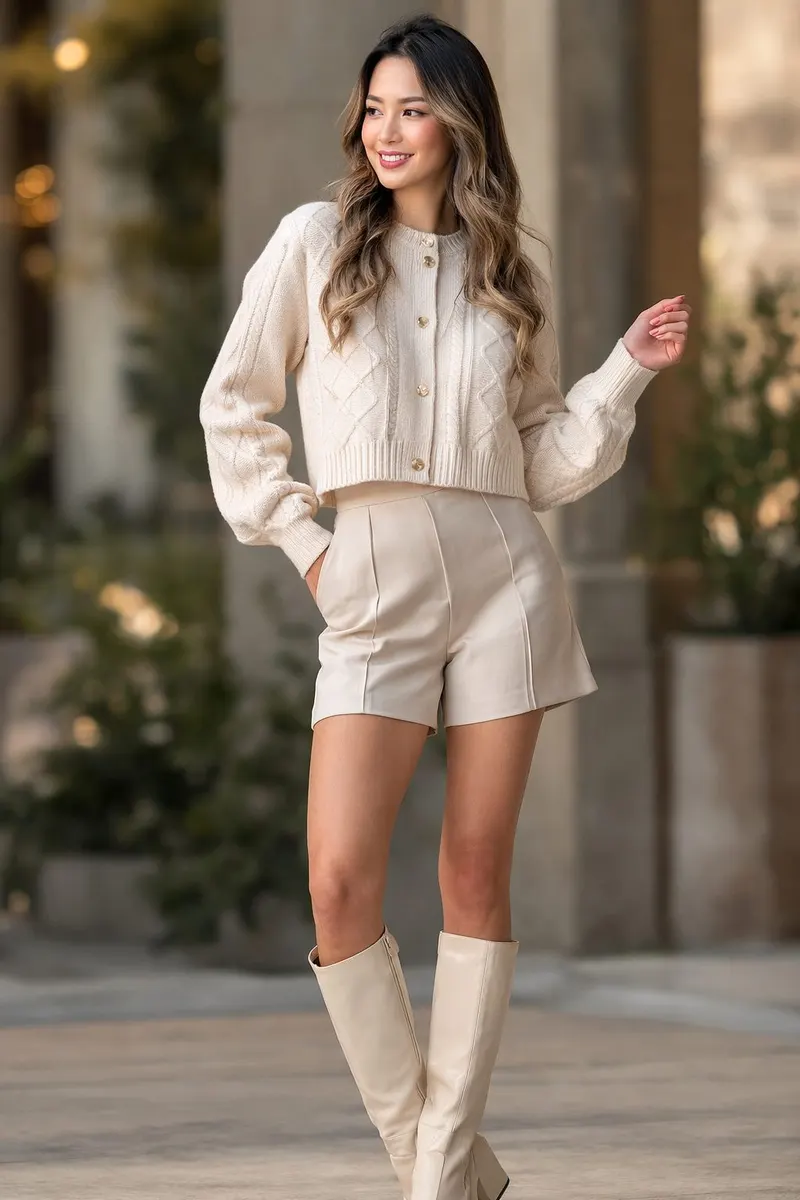
Cream Cable-Knit Cardigan with Tailored Shorts and Knee-High Boots for Polished Transitional Style
-
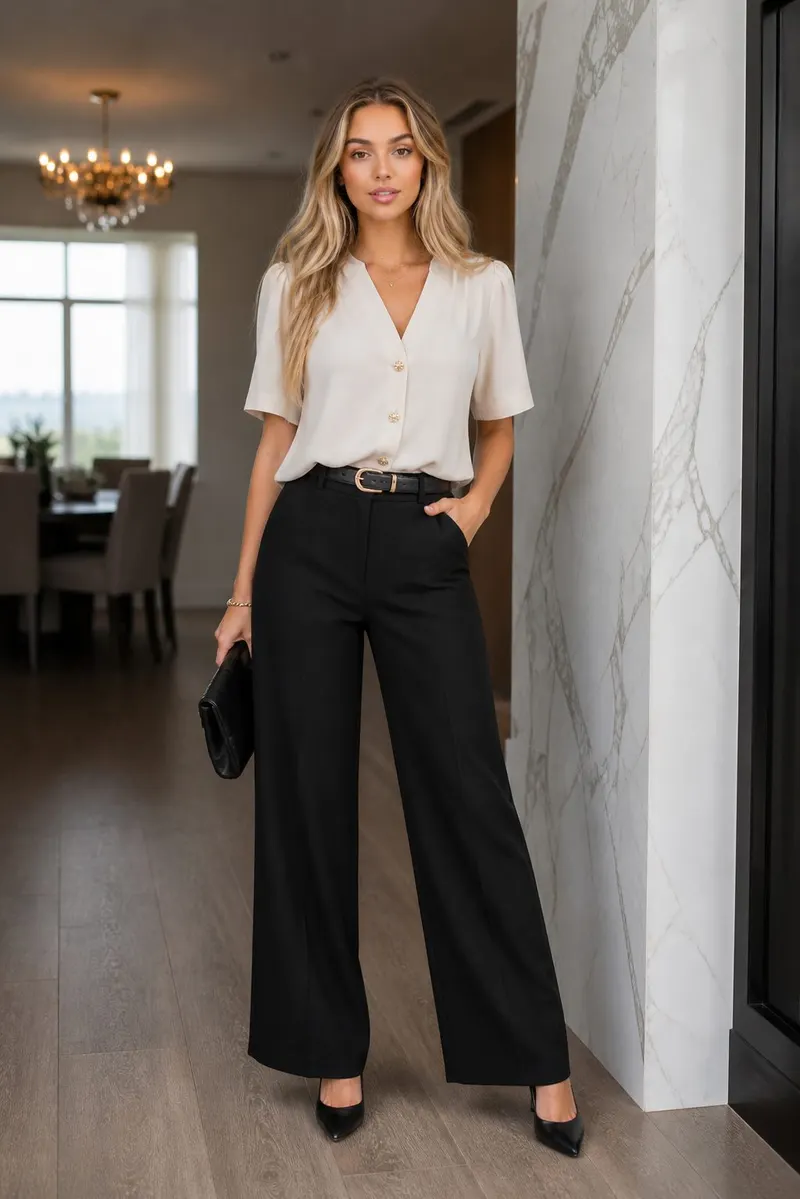
Cream Button Blouse Outfit: A Polished Modern Classic Look for Everyday Elegance
-
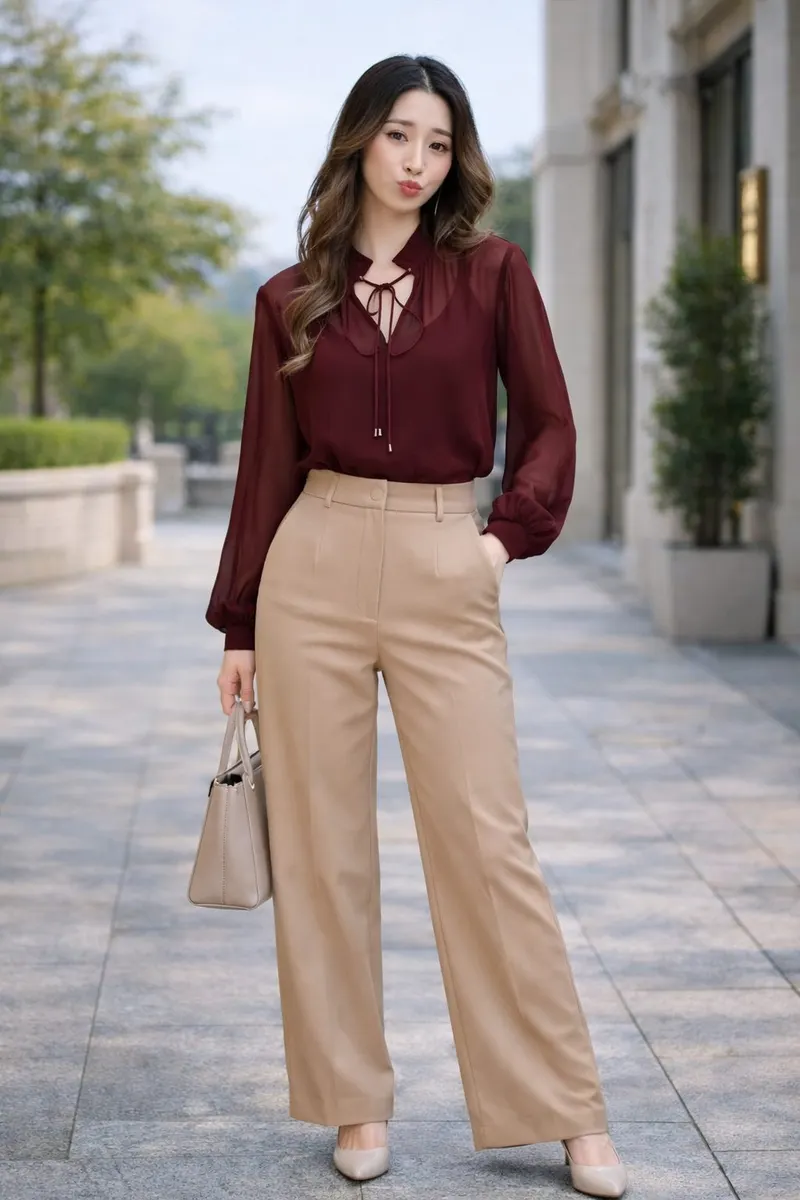
Burgundy Sheer Tie-Neck Blouse & Camel Wide-Leg Trousers: Polished Office Chic with a Soft Edge
Sources
- Stylen editorial policy (accessed 2026-09-28) — Affiliate disclosure, AI usage, and recommendation standards
Related articles
-
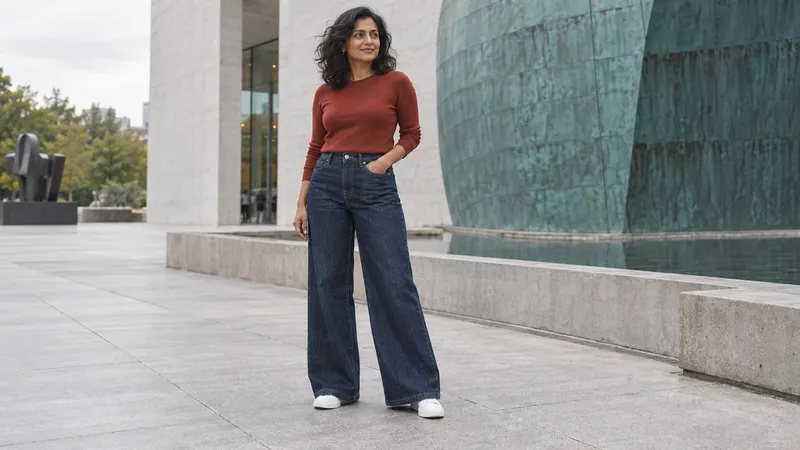 Clothing Best Wide-Leg Jeans for Women by Height and Shape Eight options for different lengths, rises and waistbands, plus how to choose a crop, check the hip fit and set a full-length hem for your everyday shoes.
-
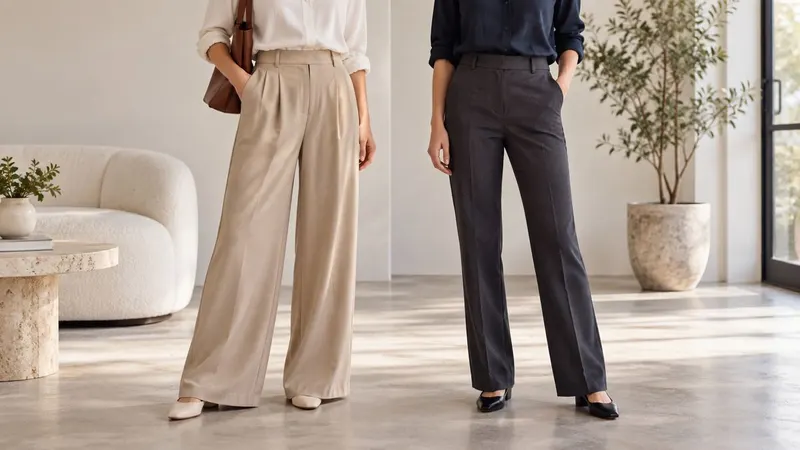 Clothing Wide-Leg vs Straight-Leg Pants: Which Works Better for Your Wardrobe? Wide-leg pants create fluid volume and a stronger silhouette; straight-leg pants are quieter and easier to balance. Here is how to choose based on dressiness, shoes, proportions, and everyday wear.
-
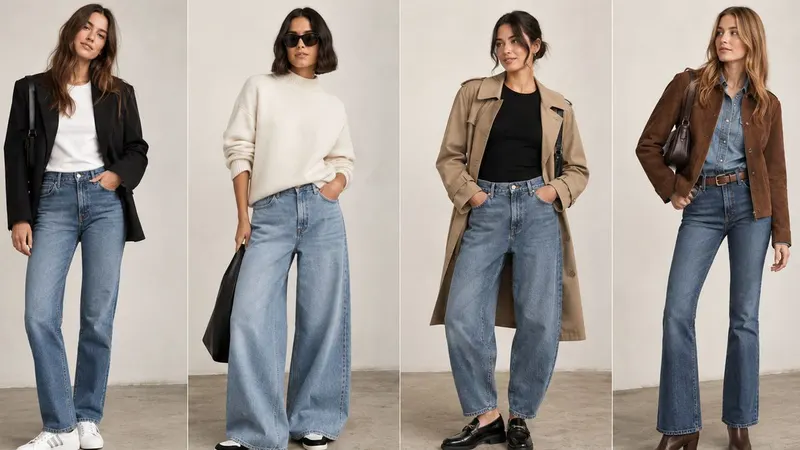 Shoes What Shoes to Wear With Jeans: Straight, Wide-Leg, Barrel and Bootcut The most flattering shoe-and-jeans pairings come down to proportion. Use the hem, leg shape and visual weight of the shoe to make straight, wide-leg, barrel and bootcut denim feel intentional.
-
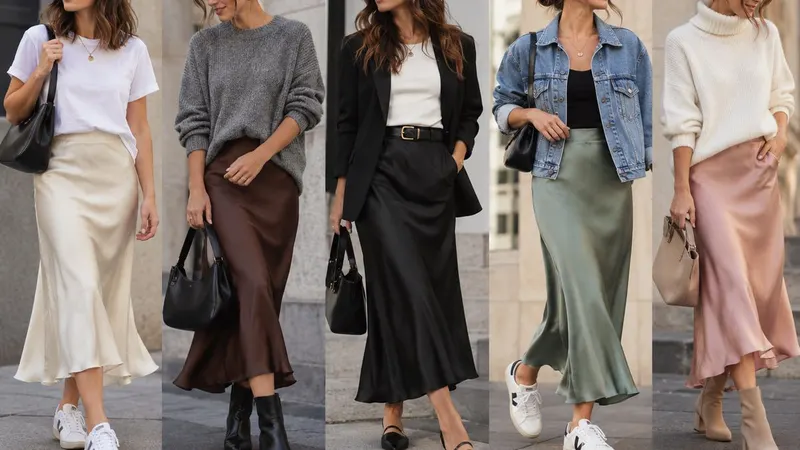 Clothing How to Style a Satin Skirt Casually: Tops, Layers and Outfit Formulas That Work A satin skirt can work far beyond dinner plans. The key is balancing its shine and fluid movement with everyday textures, relaxed layers and shoes that lower the formality.