styling
How to Style an Oversized Blazer Without Looking Boxy: A Guide to Proportion
An oversized blazer looks most intentional when the rest of the outfit gives its volume a clear counterpoint. Use fitted layers, visible waist or leg line, and deliberate shoes to keep the silhouette relaxed rather than shapeless.
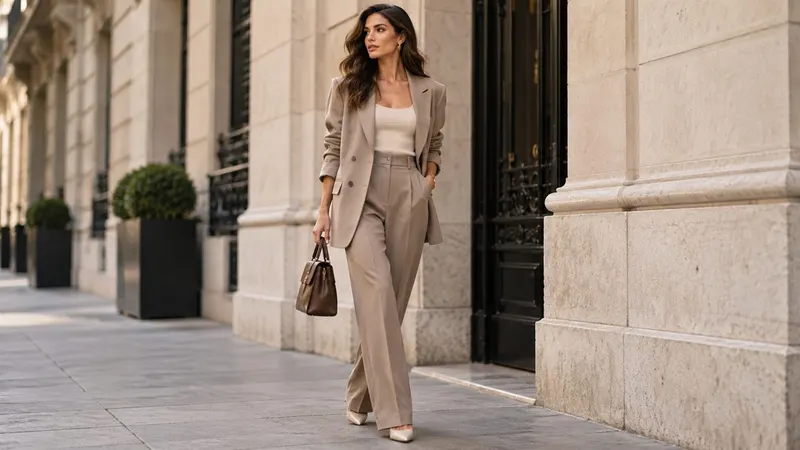
Decision this guide answers: Style an oversized blazer so the volume feels deliberate, balanced and adaptable across work, weekend and evening outfits.
An oversized blazer is supposed to have presence. The aim is not to make it look small, but to give that volume enough structure elsewhere in the outfit that it reads as intentional.
The easiest way to think about proportion is to decide where the outfit will be close, clean or exposed. If the blazer is broad through the shoulder and long through the body, the rest of the look benefits from at least one clearer line: a fitted layer underneath, a visible waist, a straight trouser shape, a bare ankle, or a shoe that visually extends the leg.
That does not mean every oversized blazer outfit needs to be tight underneath. It means the volume should have a counterpoint.
Start with the silhouette
Before choosing colours or accessories, look at three parts of the blazer: shoulder width, jacket length and lapel scale.
A blazer with a strongly dropped shoulder already creates width at the top. Pairing it with another wide, soft layer underneath can blur the outline, especially if both pieces end around the same point on the body. A more fitted tank, tee or fine knit gives the jacket a cleaner frame.
Length matters just as much. A blazer that reaches the upper thigh can visually shorten the leg line when worn with a low-rise bottom or a long untucked top. High-rise trousers, a partial tuck or a cropped inner layer can restore that proportion without making the outfit feel overly styled.
One simple formula is:
- oversized blazer
- close-fitting base layer
- high-rise straight or softly wide trouser
- shoe with a defined shape
The contrast is what makes the blazer look relaxed rather than shapeless.
What to wear under an oversized blazer
A fitted layer is the simplest option because it gives the eye somewhere to register the body underneath the jacket. A ribbed tank, slim tee, bodysuit or fine-gauge knit all do this well.
If you prefer looser layers, control the length rather than the width. A fluid shirt can work beautifully under an oversized blazer when the front is tucked, the cuffs are visible, or the shirt hem is short enough that it does not create a second long horizontal line beneath the jacket.
For work, a fine knit or crisp shirt keeps the look polished. For weekends, a simple tee softens the tailoring. For evening, a camisole or close-fitting top reduces visual weight and lets the blazer act as the outer layer rather than the whole outfit.
The useful principle is to avoid making every layer equally oversized. Let one piece lead.
What pants work with an oversized blazer
There is no single correct trouser shape. The better question is what line you want the lower half to create.
Straight-leg trousers are the easiest balance. They echo the blazer’s tailoring without adding much extra volume, so the outfit feels long and controlled.
Slim or cigarette trousers create more contrast. This can make a very large blazer feel sharper, especially with loafers, pumps or ankle boots.
Wide-leg trousers can also work, but the line should be deliberate. Look for a high rise, clean drape and enough length to skim the shoe. If both jacket and trousers are generous, a fitted top underneath becomes more important because it gives the outfit a visual anchor.
Jeans make the blazer feel less formal. Straight, bootcut or gently flared denim usually gives more structure than very slouchy jeans. A lighter wash pushes the outfit toward daytime; darker denim feels more polished.
If you are concerned about looking shorter, avoid breaking the leg line in several places at once. A high rise, longer trouser and shoe in a similar tonal family can make the outfit feel more continuous.
Day styling: relaxed but still intentional
For daytime, let the blazer be the polished element and keep the rest simple.
A fitted white or grey tee with straight-leg jeans and loafers gives you enough contrast in both texture and shape. The blazer adds width at the shoulder, while the straight denim keeps the lower half calm.
Another useful formula is an oversized blazer over a column of one colour: black tank with black trousers, cream knit with cream trousers, or navy top with dark denim. The uninterrupted base creates a vertical line, and the blazer sits over it rather than competing with it.
If the outfit still feels heavy, expose a little more skin at one point. Push the sleeves up, show the ankle, or choose an open neckline. These small breaks stop a long blazer from visually covering the whole body.
Work styling: keep the lines clean
At work, the oversized blazer looks most convincing when the pieces underneath are simple enough to support it.
Try a fine knit with high-rise trousers, or a tucked shirt with a straight skirt. A belt can help, but it is not essential. The more important detail is that the waist or leg line remains readable somewhere in the outfit.
Shoes change the formality quickly. Loafers keep the look grounded, pointed flats lengthen the line without adding height, and a low heel sharpens the silhouette further.
A structured work tote works well because it echoes the blazer’s geometry. If the blazer is especially broad, a medium-size bag tends to feel more balanced than a very tiny one for daytime.
Evening styling: reduce bulk and add contrast
For evening, the easiest shift is not to make the blazer more dramatic; it is to simplify what sits underneath it.
A fitted camisole with tailored trousers, a slip dress, or a close-fitting knit with a long skirt gives the blazer room to function as the relaxed outer layer. The contrast between a soft or sleek base and structured tailoring creates more tension than adding extra statement pieces.
A smaller shoulder bag or clutch makes the proportions feel more evening-specific. Pointed shoes, slingbacks or a slim ankle boot also create a cleaner finish than a heavy daytime shoe.
If the blazer is long, leaving it open often works better at night because the vertical opening reveals the base outfit and keeps the front of the body visually uninterrupted.
Shoes, bags and accessories that keep the look balanced
Accessories matter most when they reinforce the line you have already created.
A pointed or lower-vamp shoe extends the leg visually, useful when the blazer is long. A chunky loafer or sneaker does the opposite: it grounds the look and makes the outfit feel more relaxed. Neither is better; they simply change the weight distribution.
For bags, think about scale. A medium structured bag works naturally with strong tailoring. A small shoulder bag creates more contrast and can make the blazer feel intentionally oversized rather than simply large.
Jewellery is usually most effective when it introduces a focal point near the face or neckline. A short chain, sculptural earring or watch is often enough. If the blazer already has bold shoulders, oversized jewellery can compete with the same area of the outfit.
Layers and seasonal shifts
In cooler weather, the challenge is keeping warmth without stacking too much bulk through the torso.
A fine roll-neck under an oversized blazer keeps the line close to the body. If you need an outer coat as well, choose one long enough to fully cover the blazer so the hems do not fight with each other.
In warmer weather, lighter base layers make the blazer easier to wear. A tank with relaxed trousers, tailored shorts or a straight skirt keeps the jacket from feeling too heavy. Rolling or pushing up the sleeves can also change the proportions by exposing the forearm.
Fabric matters here. Linen blends and softer wool feel more relaxed; crisp suiting creates a stronger architectural shape. The same oversized cut can read casual or formal depending on texture.
Common proportion problems and how to edit them
If the outfit feels too boxy, reduce volume in one place. Swap a loose shirt for a fitted knit, or change a slouchy trouser to a straighter cut.
If the outfit feels too long, raise the visual waist with a tuck or high-rise bottom. A shorter inner layer can create the same effect.
If the outfit feels too heavy, expose the wrist, ankle or neckline, or switch to a shoe with a lighter profile.
If the blazer feels too formal, soften the base with denim, a tee or a sneaker rather than trying to make the blazer itself casual.
If the look feels too styled, remove one focal point. An oversized blazer already makes a statement through shape; it rarely needs a complicated bag, shoe and jewellery story at the same time.
The goal is not to minimise the blazer’s size. It is to make the rest of the outfit clear enough that its volume looks chosen. If you are still shopping for the jacket itself, our blazers under $60 shortlist is a useful place to start.
Frequently asked questions
What do you wear under an oversized blazer?
A close-fitting tee, tank, bodysuit or fine-gauge knit gives the blazer's volume a clear contrast. A looser shirt can also work if you keep the hem controlled with a tuck or choose a lower-volume bottom.
What pants work with an oversized blazer?
Straight-leg trousers, slim tailored pants, bootcut jeans and column-like wide-leg trousers all work. The useful question is whether the lower half creates a clean line that balances the blazer rather than adding uncontrolled bulk.
How do you wear an oversized blazer without looking bigger or shorter?
Keep one vertical line visible: show some waist, choose a shorter inner layer, use high-rise bottoms, or let a straight trouser line run uninterrupted to the shoe. A lower-vamp or pointed shoe can add even more length.
Can an oversized blazer work for evening?
Yes. Replace casual layers with a camisole, fitted knit or sleek column dress, then use a more refined shoe and smaller bag. The blazer keeps the look relaxed while the base layer changes the level of polish.
Styling inspiration
-
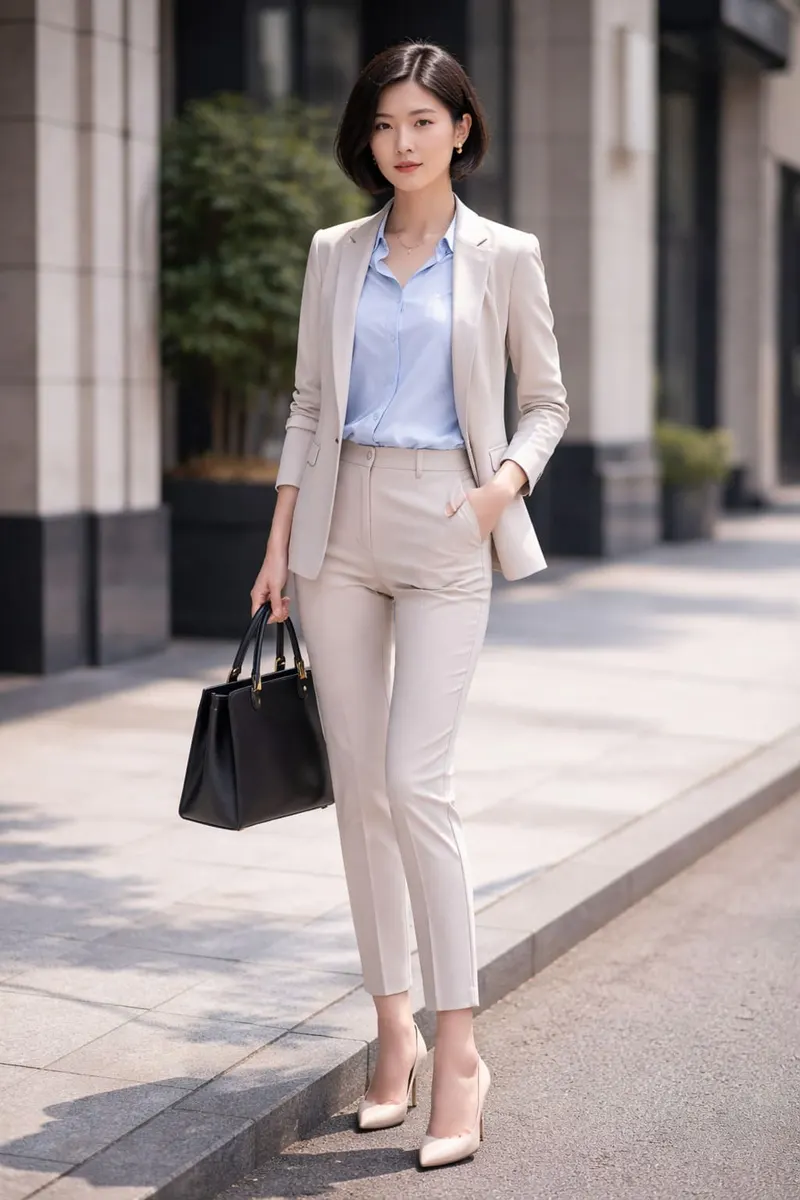
Soft Minimal Office Chic: Beige Suit Set with Sky-Blue Shirt & Structured Tote
-
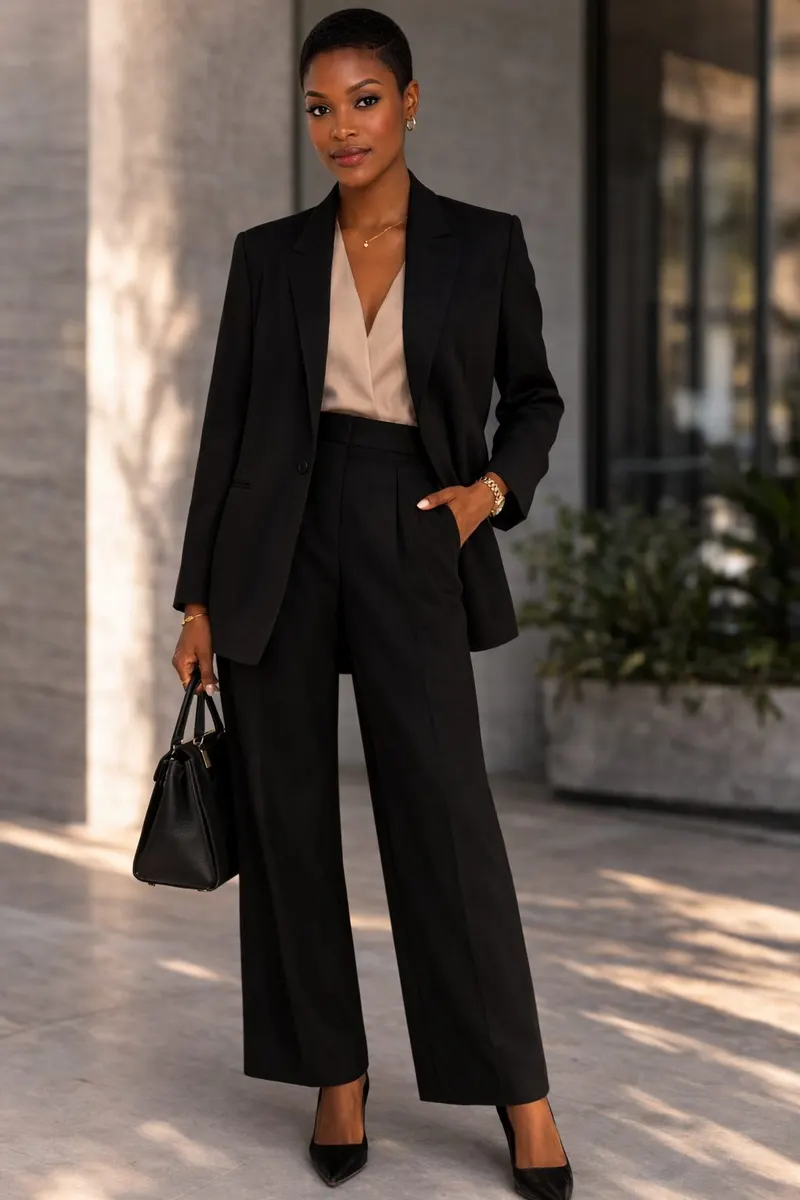
Black Blazer and Wide-Leg Trousers Outfit: Polished Minimal Workwear With Editorial Ease
-
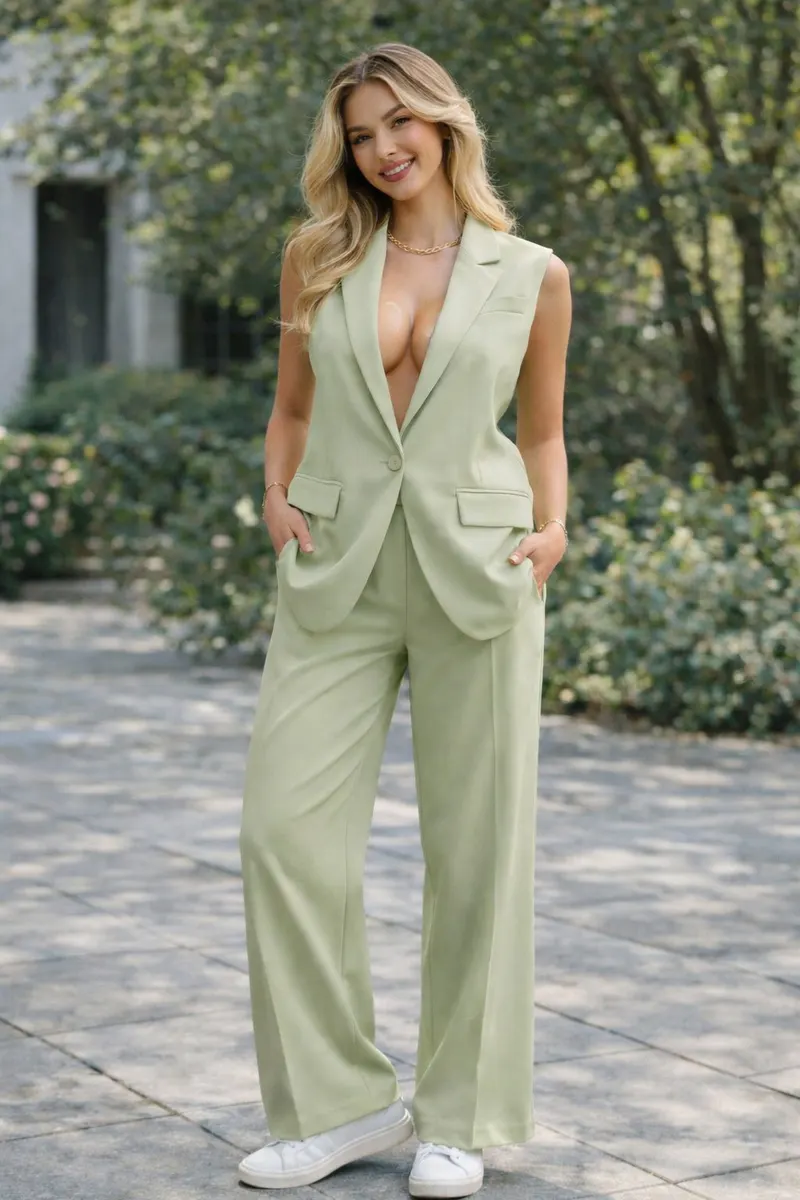
Sage Sleeveless Blazer Set Outfit: Modern Tailoring with a Soft Relaxed Edge
-
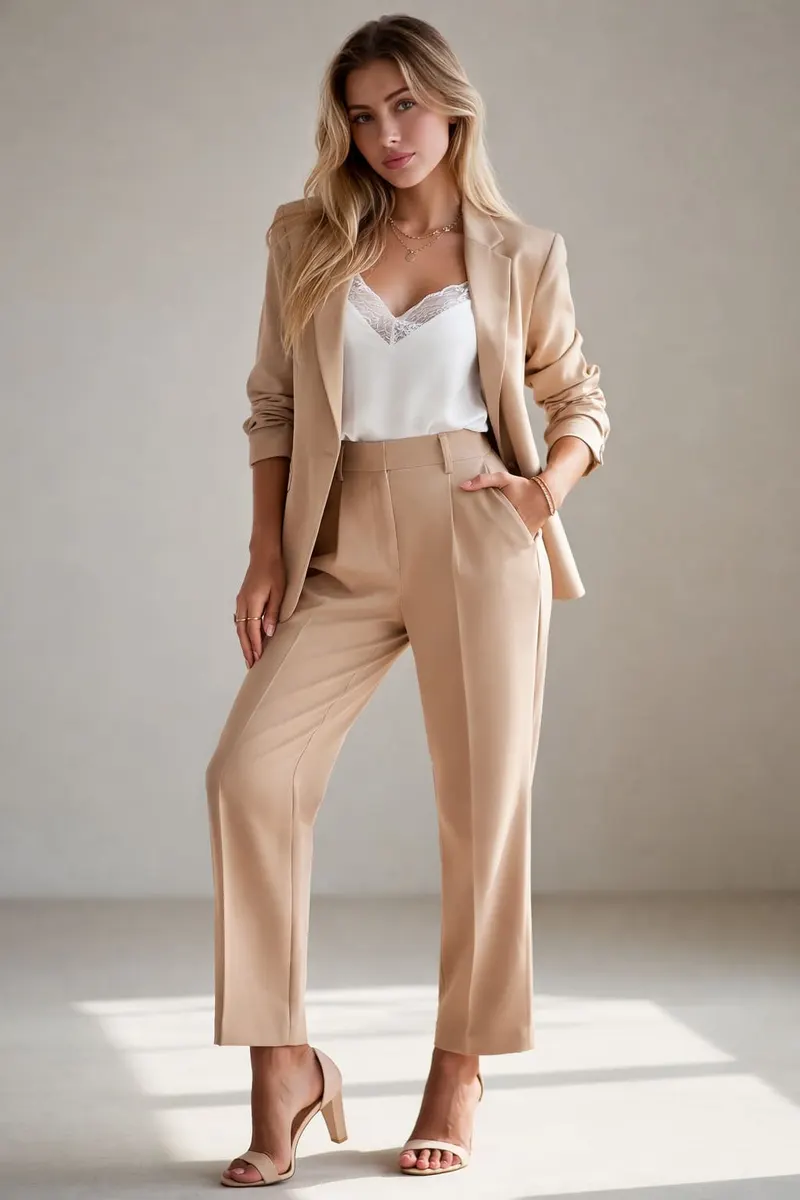
Beige Tailored Suit Set: Soft Power Dressing with a Clean, Modern Finish
-
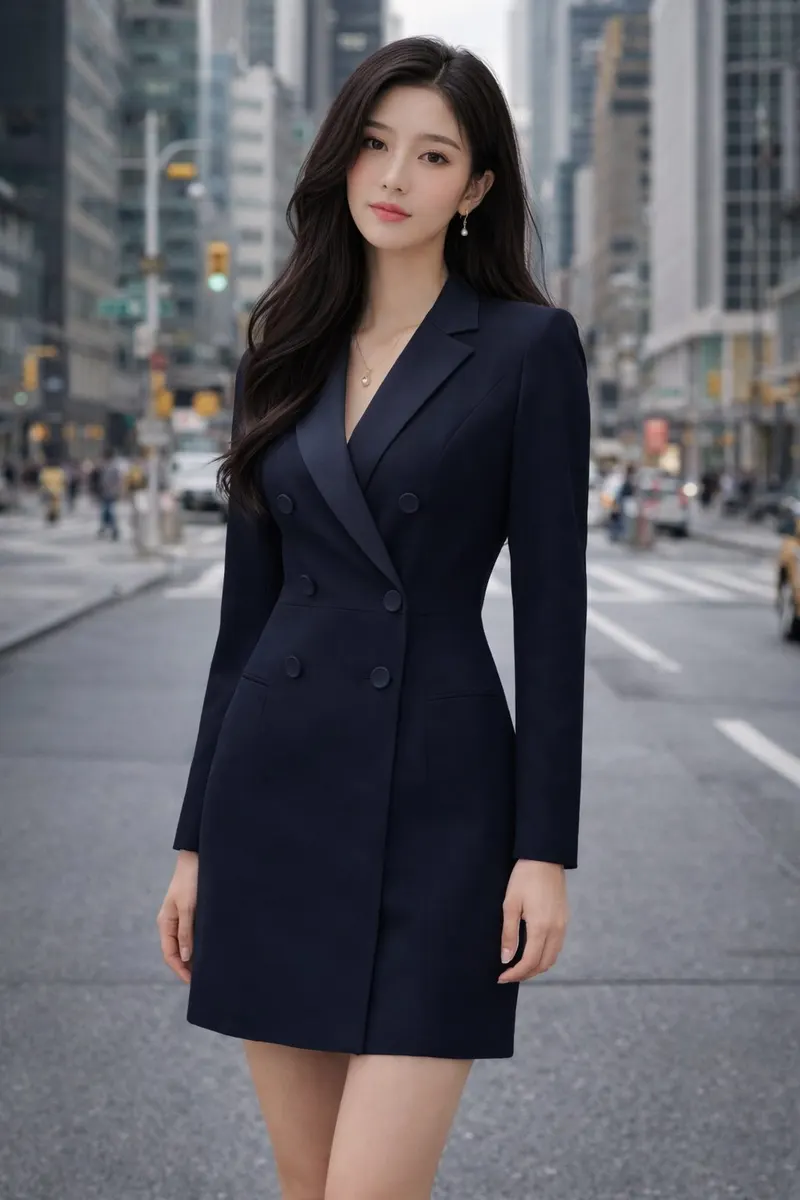
Navy Blazer Dress Outfit: Polished City Style with a Modern Power-Dressing Edge
-
Burgundy Glitter Halter Mini Dress: A Ruched Party Look for Holiday Nights
Sources
- Stylen editorial policy (accessed 2026-09-30) — Affiliate disclosure, AI usage, and recommendation standards
Related articles
-
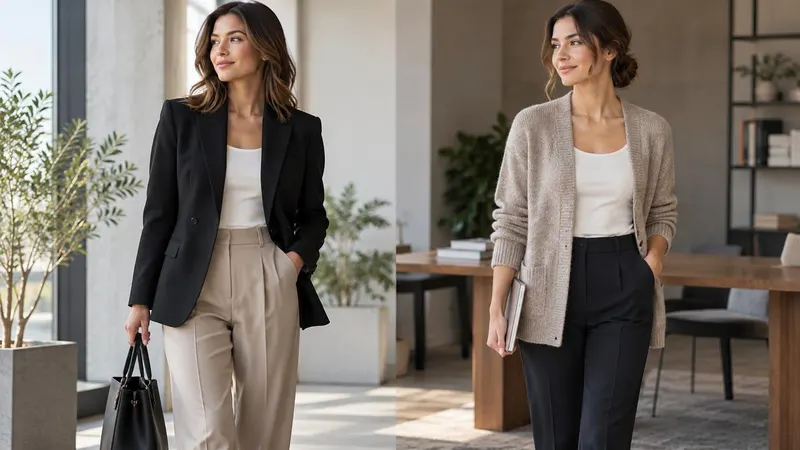 Clothing Blazer vs Cardigan for Business Casual: When Should You Wear Each? A blazer sharpens business casual with structure; a cardigan softens it with comfort. Use your workplace formality, schedule, and preferred silhouette to decide.
-
 Shoes What Shoes to Wear With Wide-Leg Pants: Flats, Sneakers, Loafers and Heels The best shoe for wide-leg pants depends less on a single rule than on hem length, toe shape and the mood you want. Use these formulas to balance volume without losing the trousers' fluid line.
-
 Clothing Wide-Leg vs Straight-Leg Pants: Which Works Better for Your Wardrobe? Wide-leg pants create fluid volume and a stronger silhouette; straight-leg pants are quieter and easier to balance. Here is how to choose based on dressiness, shoes, proportions, and everyday wear.
-
 Clothing Best Wide-Leg Jeans for Women by Height and Shape Eight options for different lengths, rises and waistbands, plus how to choose a crop, check the hip fit and set a full-length hem for your everyday shoes.